|
|||||
|
|
|||||
Fishing is a terrific way to procure food in a survival situation. Fish are a great source of lean protein, a very important nutrient in survival. While fresh water fish are not as high in healthy omega-3 fatty acids as their saltwater cousins (generally speaking), they are still a wonderful source of lean protein and can be high in B vitamins as well.
Many survival enthusiasts are a bit intimidated by the prospect of relying on fishing to feed their family in a survival situation. They think that fishing is too difficult, too unpredictable, or unreliable to consider a viable option as a consistent food source. We at E2S could not disagree more. If you understand a few basic concepts about fish and fishing,
fishing can be an
extremely
viable way to meet your nutritional needs in a survival scenario.
Fish are extremely basic creatures. They are far less intelligent than most other game animals. So why do they
seem
so elusive? Well, probably because fish live in a habitat that most of us "land creatures" are far less familiar with than our own. Unlike deer, rabbits, squirrels and other land creatures that we frequently hunt, fish don't spend any time on land where we can observe them easily. Many of us have hiked through the habitat of these other game animals and have encountered these animals face to face... but not fish. Fish live in another world where few of us have gone for any length of time. We are separated by a glass-like barrier. We know fish are in water, but where exactly in that water are they? Deep? Shallow? And how do we pinpoint their exact location? And... how will we know since the vast majority of the time we can't see them at all?
Any avid fisherman will tell you that when it come to fishing, you have to look for and follow the clues around you if you want to catch fish. You have to look for signs that indicate there are fish near by. Sure, many professional fisherman use fancy and expensive electronics to locate fish, but contrary to what you might think, these fisherman don't 100% rely on these electronics exclusively. That would be completely impractical. These guys fish MASSIVE bodies of water (often several hundred acres) and there is no way they could just scan the entire body of water with electronics to find the fish. That could take them months ! Even the pros rely on knowledge of fish behavior first to rule out the vast majority of the unproductive waters and then they turn to their electronics to really pinpoint the fish and confirm wheter or not they are on specific structure and cover. So what kind of knowledge do the pros use to pre-qualify the water they fish? What kind of signs do they look for when they are on the water? First of all they consider time of year and water temperatures . They know that fishing is seasonal and fish behave differently during different times of the year and conditions (more on this in a bit). Weather is another factor. Since fish are cold blooded, they are extremely sensitive to weather and pressure changes. Water clarity is also another factor that impacts what the fish do. Some even believe that moon phases impact fish behavior!
But what about on-the-water clues about fish location? Obviously disturbances on the water's surface is a good sign. Fish actually jumping out of the water chasing bait fish or insects is one of the most blatant signs that there are fish nearby. Birds can also be a good indication that fish are nearby. But here's one of the best indications:
Big fish tend to follow smaller fish around as a small fish are often dinner for a bigger fish
.
|

|
||||


|
|||||
|
|||||

|
|||||
|
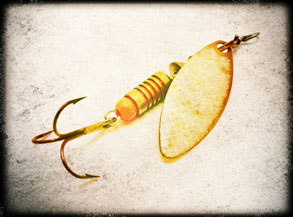
Another terrific guideline to follow when fishing is the ever-popular "Match the Hatch!" This simply means to choose a presentation (a lure) that best imitates exactly what the fish are currently eating . Simple, right? For example, if you want to catch bass and the bass are feeding primarily on shad, then tie something on that is silver and about the same size as the shad the bass are eating. Then give yourself an advantage by making your lure stand out a bit by making it look like the one injured shad in the bunch! Fish are opportunists and love an EASY meal over a challenging one. They are all about easy calories just like we survivalists! As usual, there are a few exceptions to some of these rules. How you fish also depends a bit on what species of fish thrive in a particular body of water. Some fish (like trout) primarily eat insects as opposed to "bait fish". Others (like smallmouth bass) feed on crayfish (not exclusively however) when available. Carp and catfish are omnivors but usually prefer stationary offerings on the bottom. Largemouth bass are voracious eaters that will even consume mice, frogs, ducklings and other medium sized snacks right off the surface of the water. This is where learning the behavior and feeding patterns of particular fish species can really help you out. Become a student of fish behavior! Go fishing! Fish Catching Methods When most people think of fishing, they do tend to picture a classic rod and reel combination , whether you are float fishing, casting, trolling or even fly fishing. If you are even a moderately experienced fisherman, then this can indeed be a great way to reliably catch your next meal. If not, you could be setting yourself up for disappointment. If you are not an experienced fisherman, there are other options. You can set up what is called a "bank line" which is basically a line you lay across the water, securely fastened at each end, with multiple lines dangling down from it into the water with hooks on the end and baited. Fish can also be shot with a bow (or slingshot) and arrow if properly rigged. A spear is also a viable method for catching fish in a survival situation, but bow fishing and spear fishing are methods that will also take practice. You can even catch fish reliably in a survival situation with various net or trap techniques (but be careful... these methods are illegal in some states. Check local laws or practice on private waters). Most importantly, if you are planning on relying on fishing as a means to provide food for you and your family, don't wait until an actual survival situation to break out your "Altoids Tin Fishing Kit" or other pocket fishing kit. Don't assume that just because you have the "necessary equipment" that you are just automatically going to be able to get results with it. Just like with any of your other survival gear, practice with it. Your life could depend on it!
Fishing is Seasonal
Fish are behave very differently during different times of the year, and there are reasons for this. As indicated before, fish are cold-blooded animals. This means that temperatures have a dramatic effect on their metabolisms. Cold water slows them down. Warm water invigorates them. And hot water can tend to slow them down again and push them deeper to cooler temperatures. So as you can see, fish behavior is not the only thing that is impacted by seasons/temperatures. Fish location is also. Does this mean that you can't catch fish in the winter time? Absolutely not. Contrary to what many people think, fish do not "hibernate" during the winter per se, but their behavior is definitely impacted by colder temperatures. You are just going to have to adjust your methods significantly in order to cath fish in the cold. For starters, during the colder months you are going to really have to slow down. Fish metabolisms slow way down when the temperatures drop. Factor this into your survival plan. Fish tend to "migrate" within a body of water according to seasons and temperatures. They tend to move toward waters that are more comfortable. That comfort zone is different for different species of fish.
Spawning is another huge variable in fishing and the spawn is definitely correlated to the seasons. Each species spawns at different times because they each need different conditions for a successful spawn. For most fresh water species spawning takes place sometime in the spring. Fish tend to feed voraciously prior to the spawn ("pre spawn")and then don't eat during the spawn. They dedicate themselves to guarding their eggs and fry. Once the fry are big enough the parents then begin to feed voraciously again in the "post spawn". And so on into the Summer, Fall, and Winter. See how this knowledge can help you make adjustments to your fishing patterns?
Choosing Promising Fishing Waters: More than any other factor, your ability to catch fish is going to be most determined by your access to quality fishing waters. Not every body of water contains quality fish suitable for eating. Fish thrive in certain types of waters and are scarce in other types of waters. Water clarity, good cover, good food sources, vegetation, oxygen, and water temperatures are some of the primary ingredients that make up a good fishery.
Fish can’t just live in any kind of water. Fish require oxygen just like we do, but they use gills to extract this oxygen from the water they live in. Not all water is well oxygenated, so they will move to the water with better oxygen levels if they can.
Fish also don’t generally prefer strong current. They tend to be opportunists that conserve energy until a quality meal comes along, waiting in “eddies” (breaks in the current) for a meal to swim by them. They will however make sure to stay in close range of a food source at all. In a survival situation, you are going to have to be even more cautious than usual about pulling your food out of polluted waters. Waters will become more polluted in a SHTF scenario, so you are going to have to choose your fishing waters more carefully. Other careless survivors are going to be dumping waste and relieving themselves in the water you are going to use as your source of drinking water and as a food supply.
|



|
||||
|
How to Catch Fish! :
There are many methods to choose from for catching fish. There is the classic "hook and line" method that most of us think of, but that is not the only way to catch fish. You can net them, trap them, spear them, use a bow and arrow, sling shot (firing arrows), poison them, shock them, and more!
Survival Fishing Kit (Pocket Fishing Kit) Part 2
In this video, I show the nearly completed Equip2Survive Pocket Fishing Kit. I quickly run through the assembled kit and how I used the small plastic tubes with vinyl end caps to organize the kit. For a more comprehensive look at survival fishing tackle choices, visit our more
comprehensive survival fishing page
.
Survival Fishing Kit (Pocket Fishing Kit) Part 3
In this video, I demonstrate the completed kit in the field and catch fish with it. For a more comprehensive look at survival fishing tackle choices, visit our more comprehensive survival fishing page .
POCKET FISHING KIT VIDEO #3 HERE
Large fish will require "cleaning" to remove any bones and guts, but small fish can be eaten whole in a survival situation. NOTE: This kit is not for sale. It is merely a design that Equip2Survive.com put together as an example of how you can create a kit like it yourself! Please feel free to copy anything you have seen in these videos for personal use, but do not copy this kit with the purpose of selling it. The Equip2Survive Pocket Fishing Kit as seen in these videos is the intellectual property of Equip2Survive.com and may not be copied and sold without the express permission of Equip2Survive.com Want to see some more great survival fishing tips, tricks, instructionals, tutorials, pics and all other knds of great stuff? Check out our Survival Fishing Pinterest Board here!: |
|
||||
|
|||||
|
|
|||||
|
|
|||||